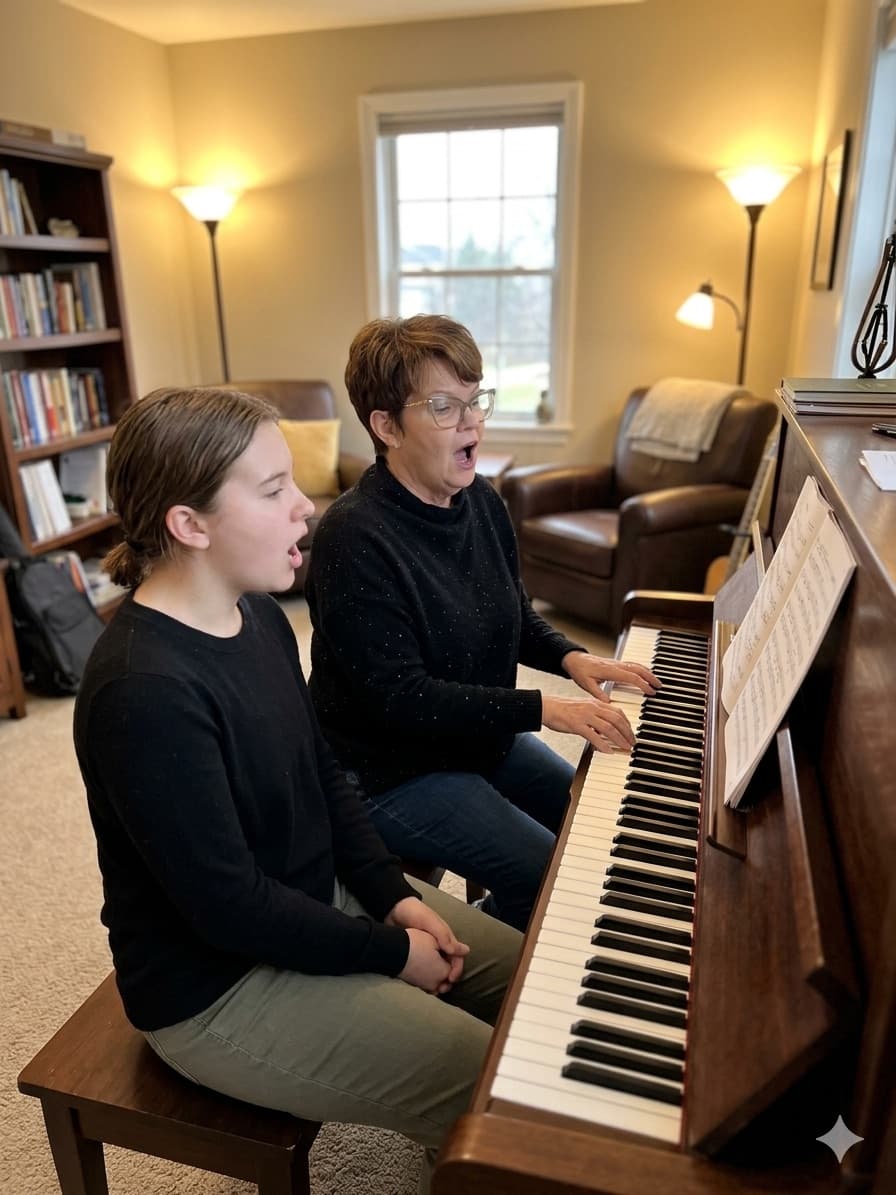
Breath Support: The One Thing That Will Transform Your Singing
SEO Title: Breath Support for Singers | Vocal Technique Guide Meta Description: Breath support is the foundation of every great singer's technique. Learn what it means and simple exercises to build it from a Minneapolis voice teacher. Pillar: Vocal Technique Primary Keyword: breath support for singing Read Time: 8 min
If I could give every singer in the world one piece of advice, it would be this: learn to breathe.
I know.You've been breathing your whole life. But singing breath is different from regular breath — and most singers, even experienced ones, are doing it in a way that limits their voice, strains their throat, and makes singing feel harder than it needs to be.
After 36 years of teaching, I can tell you: breath support is the single most transformative thing you can work on.Fix your breath, and almost everything else gets easier.
What Is Breath Support, Really ?
Let's clear up some confusion first.
Breath support is not about taking a huge gulp of air before every phrase.It's not about holding your breath. And it's definitely not about sucking in your stomach.
** Breath support is the steady, controlled release of air pressure that powers your voice.**
Think of it like a bow on a violin string.The bow(your breath) creates the sound.If the bow moves too fast, the sound is thin and scratchy.Too slow, and it barely makes a sound at all.The right amount of steady, controlled pressure creates a rich, resonant tone.
Your voice works the same way.
Why Most Singers Struggle With It
Here's what I see constantly in new students:
** The chest breather.** They take a big breath and their shoulders rise, their chest puffs out, and their neck tightens.This is shallow breathing — it fills only the top third of your lungs and creates tension in exactly the wrong places.
** The holder.** They take a breath and then clamp down, releasing air in little bursts.The result is a choppy, effortful sound.
** The collapser.** They take a good breath but then let their torso collapse as they sing, losing all the support they built up.
None of these are character flaws.They're just habits — and habits can be changed.
The Anatomy You Need to Know
You don't need a medical degree, but understanding a few basics helps.
** The diaphragm ** is a dome - shaped muscle that sits at the base of your lungs.When you inhale, it contracts and flattens downward, creating space for your lungs to expand.When you exhale, it relaxes and rises back up.
** Appoggio ** (from the Italian word for "support" or "leaning") is the classical term for the technique of maintaining the expanded position of your torso as you sing.Instead of letting everything collapse the moment you start a phrase, you resist that collapse — gently, not rigidly — and let the air release in a controlled, steady stream.
This is breath support.
How to Find Your Breath Support
Exercise 1: The Hissing Breath
This is my favorite exercise for teaching breath support because you can feel it working immediately.
-
Stand comfortably with your feet hip - width apart
-
Place your hands on your lower ribs, fingers pointing toward your belly button
-
Take a slow, deep breath through your nose — feel your ribs expand outward and your belly gently push forward
-
Now exhale on a long, steady "ssssss" sound
-
As you hiss, try to keep your ribs expanded — resist the urge to let them collapse inward
-
See how long you can sustain the hiss with a steady, even pressure
** What you're feeling:** That resistance — the gentle tension between your expanding ribs and the air wanting to rush out — is breath support.
Exercise 2: The Candle Flame
Imagine a candle flame about six inches in front of your face.
-
Take a supported breath(ribs out, belly forward)
-
Exhale slowly on a "fff" sound — just enough to make the flame flicker, but not blow it out
-
Sustain that gentle, steady stream of air for as long as you can
-
Now try the same thing on a hum, then on a vowel
** The goal:** Consistent, controlled airflow.Not a burst, not a trickle — a steady stream.
Exercise 3: The Straw Exercise
This one sounds silly but it works beautifully.
-
Get a regular drinking straw
-
Take a supported breath
-
Sing a comfortable note through the straw — just hum into it
-
The resistance of the straw forces you to use breath support to maintain the sound
-
Try sliding up and down in pitch while keeping the sound steady
** Why it works:** The straw creates back - pressure that helps your vocal cords find the right balance with your breath.Many professional singers use this as a daily warm - up tool.
Common Mistakes(And How to Fix Them)
"I run out of air before the phrase ends."
** The problem:** You're either not taking enough breath, or you're releasing it too quickly at the start of the phrase.
** The fix:** Practice the hissing exercise and focus on that initial resistance.Don't let the air rush out — control it from the very first moment.
"My throat feels tight when I try to support."
** The problem:** You're confusing support with tension. True breath support happens in your torso — your throat should stay open and relaxed.

    ** The fix:** Think of your throat as a garden hose.The water pressure(breath support) comes from the source, not from squeezing the hose.If you feel throat tension, back off and focus on keeping your neck and jaw soft.
"I feel dizzy when I practice breathing."
** The problem:** You're probably hyperventilating — taking in more air than you need and not using it efficiently.

    ** The fix:** You don't need as much air as you think. Practice taking a moderate breath (not a maximum breath) and using it efficiently. If dizziness persists, take a break and breathe normally.
"I can't feel my diaphragm."
** The problem:** You can't actually feel your diaphragm directly — it's an internal muscle.What you feel is the movement it creates.
** The fix:** Lie on your back and place a book on your belly.Breathe naturally and watch the book rise and fall.That movement is your diaphragm at work.Now try to recreate that same movement while standing.
Breath Support in Real Singing
Here's where it all comes together.
When you're singing a phrase, breath support means: - Taking a quick, efficient breath before the phrase - Maintaining the expanded position of your torso as you sing - Releasing air in a steady, controlled stream — not all at once - Arriving at the end of the phrase with some air still in reserve(not gasping)
** A practical tip:** Think of your breath as a budget.You have a certain amount to spend on each phrase.Spend it wisely — don't blow it all in the first two words.
Why This Changes Everything
When your breath support is working, here's what happens:
- ** Your tone becomes richer and more resonant ** — because your vocal cords have the steady air pressure they need to vibrate fully
    - ** Your high notes become easier ** — because you're not squeezing your throat to compensate for weak breath
        - ** Your phrases become longer ** — because you're using your air efficiently
            - ** Your voice feels less tired ** — because you're not working against yourself
                - ** Your confidence grows ** — because you have a reliable foundation under every note
I've watched students transform their voices in a matter of weeks just by addressing breath support. It's not magic — it's physics. Give your voice the right foundation, and it will reward you.
A Daily Practice Routine
Spend just 5 minutes a day on these exercises:
- ** Hissing breath ** — 3 sets of 30 seconds(1.5 minutes)
- ** Candle flame on a vowel ** — 3 sets of 20 seconds(1 minute)
- ** Straw humming ** — up and down through your comfortable range(2 minutes)
- ** One song phrase ** — apply the support consciously to a phrase you're working on (30 seconds)
Consistency matters more than duration.Five minutes every day beats an hour once a week.
The Bottom Line
Breath support isn't a secret technique reserved for opera singers. It's the foundation of all healthy, expressive singing — whether you're performing a Broadway ballad, a folk song, or a hymn at your church.
And it's learnable. At any age. At any level.
If you've been singing for years and something has always felt effortful or limited, there's a good chance breath support is the missing piece.
Ready to feel the difference in your own voice ? Schedule a lesson and we'll work on your breath support together — in a way that's specific to your voice and your goals.
- Questions about breath support or vocal technique ? Contact me — I love talking about this stuff.*