The Summer Switch: Why College Voice Students Explore Different Teachers (And How to Make It Work)
SEO Title: Summer Voice Lessons for College Students | Minneapolis Meta Description: Studying with different voice teachers isn't disloyal — it's smart pedagogy. Learn how summer voice lessons deepen your technique and broaden your perspective. Category: Vocal Technique Primary Keyword: summer voice lessons college students Read Time: 9 min
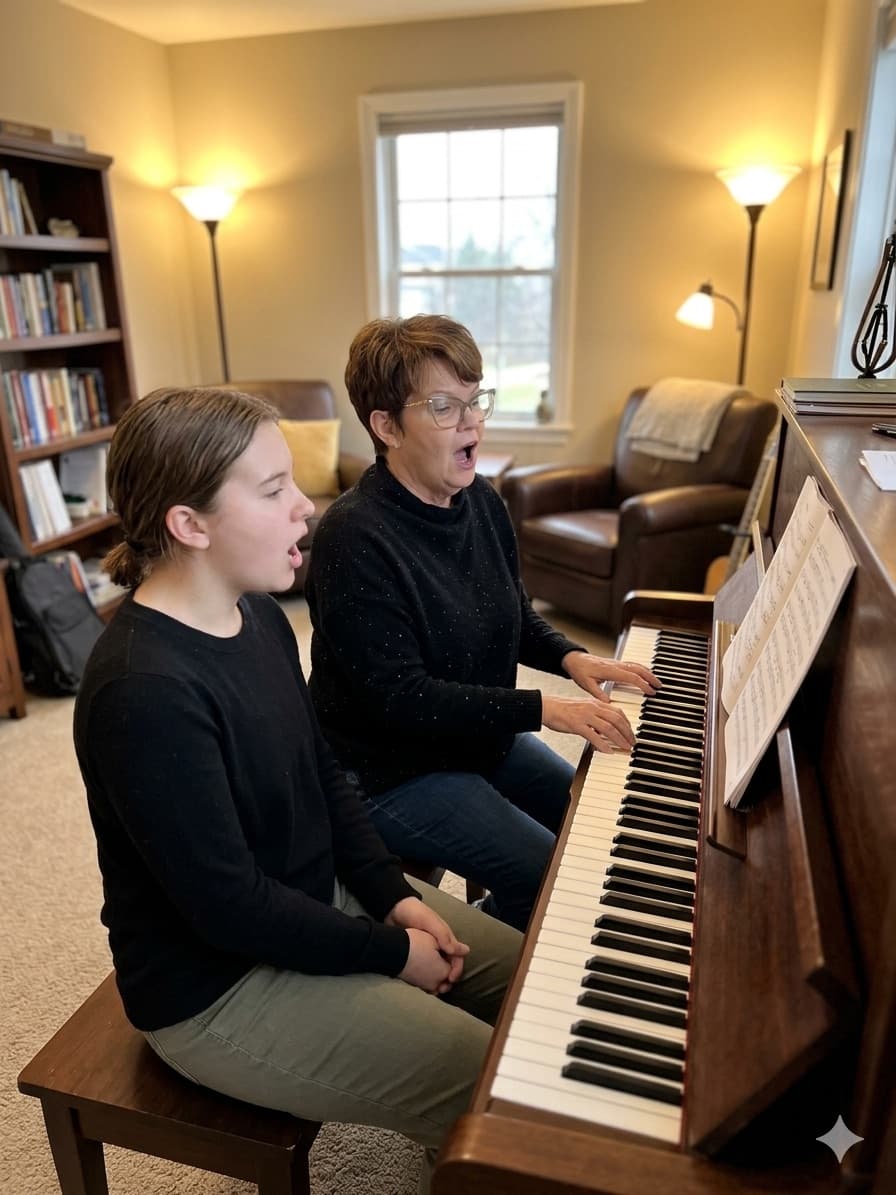
She sat on the edge of my studio couch looking like she was about to confess something.
"I have a voice teacher at school," she said carefully. "A good one. But I'm home for the summer, and I thought maybe... I could work with someone different? Just for a few months?"
She paused. "Is that weird? Like, is it cheating?"
I hear some version of this every May. College voice students — serious ones, the kind who are genuinely invested in their craft — come home to Minneapolis for the summer and want to keep studying. But they worry that working with a different teacher means they're being disloyal to their primary instructor.
Here's what I tell every one of them: studying with different voice teachers isn't disloyal. It's smart vocal pedagogy. And if your college teacher is a good one, they'll agree.
The Value of Different Pedagogical Approaches
There is no single "right" way to teach voice. Every experienced teacher has developed their own approach, shaped by their training, their performing experience, and the thousands of students they've worked with.
Your university voice teacher might emphasize resonance placement and vowel modification. Another teacher might focus on breath management and body alignment. A third might prioritize repertoire coaching and interpretive expression. None of them is wrong — they're illuminating different facets of the same complex skill.
Professional singers understand this intuitively. Throughout their careers, they study with multiple teachers, attend masterclasses with visiting artists, and seek out coaches who specialize in specific repertoire or technique. Working with one teacher doesn't invalidate what they learned from another — it deepens it.
As a college voice student, you're at the beginning of that professional journey. Exploring different pedagogical approaches isn't a sign of disloyalty. It's a sign that you take your development seriously enough to seek out multiple perspectives. That kind of intellectual curiosity is exactly what separates students who grow into mature artists from those who plateau.
Finding the Right Summer Voice Teacher
The goal isn't to replace your university training — it's to complement it. When you're looking for a summer voice teacher, consider what would add the most value to what you're already doing.
Maybe your university teacher focuses heavily on classical repertoire, and you want summer work on contemporary or musical theater technique. Maybe you've been working on expanding your upper range all year, and you want a teacher who approaches the passaggio differently. Maybe you want focused agility work, or help with a specific audition repertoire, or performance coaching that emphasizes stage presence.
Be honest with yourself about what you need. The best summer work is focused work — one or two specific technique challenges, not a complete overhaul of everything your primary teacher has built.
Communication matters, too. If you're comfortable, let your university teacher know you're planning to study over the summer. Most experienced teachers will appreciate your commitment to continued training. Some may even have specific recommendations for what to focus on while you're away.
Establish clear goals before your first summer lesson. Come in knowing what you want to work on, what your university teacher has emphasized, and where you feel stuck. The more specific you are, the more productive our time together will be.
Maximizing Your Summer Voice Training
Summer is a gift for serious voice students. Without the pressure of juries, recitals, and academic deadlines, you can focus entirely on technical development.
Here's how to make the most of it:
Practice daily. Not occasionally. Not when you feel like it. Every day. Even if it's only twenty minutes, daily practice builds the muscular memory and coordination that sporadic marathon sessions never will. If you need strategies for maintaining a consistent home routine, I've written about effective practice approaches that work even in shared living spaces.
Set specific goals. "Get better at singing" is not a goal. "Develop a more consistent legato line through the passaggio" is a goal. "Build three new audition pieces in contrasting styles" is a goal. Work with your summer teacher to define two or three concrete objectives for the summer intensive period.
Document your insights. Keep a practice journal. Record yourself regularly. Note what works, what clicks, what your summer teacher explains differently from your university teacher. This documentation is invaluable when you return to school — it helps you integrate new ideas without losing what you've already built.
Expand your repertoire. Summer is the perfect time to explore songs and pieces that stretch your range in new directions. Without the constraints of a semester's jury requirements, you can take risks, try unfamiliar styles, and discover repertoire that excites you.
The students who benefit most from summer intensives are the ones who approach it with the same seriousness they bring to their academic work. This isn't a vacation from training — it's an opportunity to go deeper.
Integrating New Insights With Your Primary Training
The transition back to your university teacher in the fall can feel awkward if you've picked up new ideas over the summer. Here's how to handle it well.
First, be transparent. Tell your university teacher what you worked on, what you learned, and what questions came up. This isn't a confession — it's professional communication. Good teachers want to know what their students have been doing.
Second, focus on complementary learning. If your summer teacher used different terminology for the same concept, don't assume one is right and the other is wrong. "Singing into the mask" and "forward placement" and "resonance focus" are often describing the same physical sensation from different angles. Your job is to find the through-line, not pick sides.
Third, if you encounter a genuine pedagogical contradiction — where one teacher says to do something and another says not to — bring it up honestly with your primary teacher. "I heard a different approach to this over the summer, and I want to understand the difference." A mature teacher will welcome that conversation.
The students who navigate this well are the ones who approach voice training as a lifelong learning process rather than a set of rules from a single authority. That kind of thoughtfulness is a sign of real artistic maturity.
Summer Voice Lessons in Minneapolis
I've been teaching voice in the Twin Cities for over 36 years, and every summer I welcome college students home from programs across the region — the University of Minnesota, St. Olaf, Concordia, Gustavus, Macalester, and schools further away.
Summer scheduling is flexible. We can arrange weekly lessons, bi-weekly intensives, or concentrated blocks depending on your availability and goals. Many of my summer students also take advantage of Twin Cities performance opportunities — community theater auditions, open mic nights, and studio recitals — to put their work into practice.
Whether you're a freshman exploring your voice for the first time outside your university studio, or a senior preparing for graduate auditions, focused summer work can transform your fall semester.
Making Your Summer Count
Your commitment to exploring different pedagogical approaches shows professional-level dedication to your craft. The fact that you're reading this — rather than simply taking the summer off — says everything about the kind of singer and musician you're becoming.
If you're looking for focused summer work to deepen your technique, I'd love to hear about your goals. Reach out to discuss your summer intensive plans, or check my summer availability.
Your university training gave you a foundation. Summer is your chance to build on it — with fresh ears, new ideas, and the kind of intensive focus that only comes when you're studying for yourself, not for a grade.
The best singers never stop learning. Summer is where the serious ones prove it.
Related Articles: